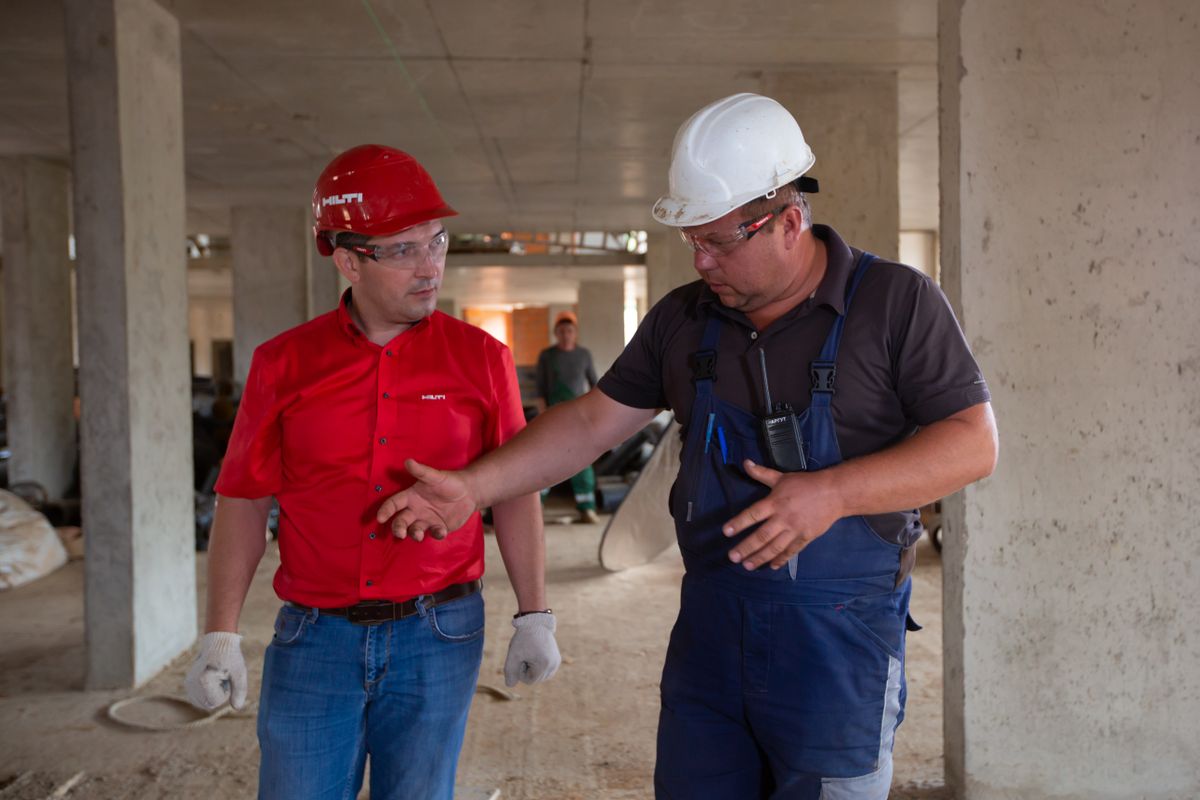
When owners search for hire construction virtual assistant or construction VA, they are usually tired of running the business from a dusty truck cab between punch lists. The phone rings while you are on the scaffold, emails pile up while you are in a trench, and bid follow-ups stall because nobody is at a desk to make the call.
A construction virtual assistant owns the coordination layer that keeps jobs moving: calls, documents, vendor chase, schedule updates, and the dozens of small administrative tasks that otherwise stall projects or fall through the cracks entirely. These are not tasks that require a contractor's license. They require attention, organization, and someone who is available when the builder is on site.
This guide covers the roles that pay for themselves fastest, what should stay with the builder or project manager, how to compare a VA to a local office hire, and how to get started without disrupting active projects.
Why construction companies need administrative support
Construction is a coordination-heavy business. Every project involves multiple subcontractors, suppliers, inspectors, and permit offices. The builder or project manager is the hub of that coordination, but they are also the person who needs to be on site supervising work. Something has to give, and it is usually the administrative side.
The cost of neglecting admin is real. Bids that are not followed up convert at a lower rate. COI lapses create compliance risk. Schedule updates that are not communicated cause subcontractor conflicts. Invoice chasing that does not happen delays cash flow. None of these problems require construction expertise to solve. They require someone dedicated to the operational workflow.
If your average project is worth tens of thousands of dollars, and you lose even one bid per month because nobody followed up, the annual cost of not having administrative support far exceeds the cost of hiring it.
Roles that pay for themselves quickly
These are the workflows that produce the fastest return when delegated to a construction VA.
- Bid and estimate follow-up: structured cadence that keeps submitted bids warm until the owner decides
- Subcontractor and COI tracking: monitoring insurance certificates, expiration dates, and compliance documentation
- Project schedule updates and reminders: keeping subcontractors, inspectors, and clients informed about dates and milestones
- Invoice and progress billing chase: following up on outstanding payments so cash flow does not stall
- Inbound call coverage for new bid requests: answering the phone and capturing project details when the builder is on site
- Permit and inspection scheduling: coordinating with municipal offices so inspections do not delay the project
- Material order tracking: confirming delivery dates and flagging delays before they impact the schedule
What good construction VA support looks like
A strong construction VA works like a project coordinator who happens to be remote. They know your active projects, your subcontractor roster, and your billing cycle. When a sub calls about scheduling, the VA checks the project calendar and gives them a confirmed date instead of taking a message.
Compare that to a generic VA who takes messages and emails them to you. By the time you check your email from the job site, the sub has already rescheduled with another GC, the inspector's office has closed for the day, and the owner is calling to ask why nobody answered their question about the project timeline.
The key difference is context and access. A VA who works in your project management system, knows your active bids, and understands construction scheduling produces outcomes. A VA who works from a separate notepad produces messages you have to process yourself.
What stays with the builder or PM
Scope decisions, field quality inspections, customer-facing pricing strategy, and safety management stay in-house. The VA executes the operating system around those decisions so work does not wait on email threads or unreturned phone calls.
In the early stages, keep complex change order negotiations, owner-facing financial discussions, and any task that requires field judgment with your senior team. As your VA learns the business and earns trust, expand their scope into more complex coordination tasks.
In-house office admin vs. construction virtual assistant
A local office admin solves the coverage problem, but the overhead is significant. Salary, benefits, office space, and the time required to hire and train add up. For smaller builders and specialty contractors, that expense may not make sense year-round, especially during slower seasons.
A construction virtual assistant provides the same coordination capacity at a lower cost. Coverage can flex with your project load, scaling up during busy seasons and down during quiet periods. Training and QA are managed by the provider, so you do not carry the burden of onboarding alone.
Larger construction companies often use both: a local office manager for in-person tasks and relationship management, supported by one or more VAs for phone coverage, document management, and follow-up workflows.
Implementation playbook
- List your active projects and the administrative tasks associated with each
- Document your bid follow-up process, COI tracking workflow, and billing cycle
- Grant access to your project management tool (Buildertrend, Procore, CoConstruct, or similar) with appropriate permissions
- Start with bid follow-up and inbound call coverage as the first two workflows
- Add COI tracking and schedule updates in weeks two and three
- Review performance weekly for the first month, then biweekly
Common mistakes when hiring a construction VA
The biggest mistake is handing off work without documented processes. If your bid follow-up cadence is 'call them when I remember,' the VA will struggle to execute consistently. Written processes with specific timing, scripts, and escalation rules are essential.
Another error is choosing a VA with no construction industry experience. Construction workflows, terminology, and scheduling dynamics are different from other industries. A VA who has never dealt with subs, inspections, or draw schedules will need extensive training before they are productive.
Finally, some builders delegate and then do not provide feedback. The first 30 days require regular check-ins, call reviews, and process adjustments. Without that feedback loop, the VA cannot calibrate to your specific business.
Tools your construction VA should work inside
Project management platforms like Buildertrend, Procore, CoConstruct, and Knowify are the backbone. Your VA should be able to update schedules, track documents, and manage communication through these tools. Accounting integration with QuickBooks or Sage helps with invoice tracking and billing.
Phone systems, email, and text messaging tools should be shared so the VA can communicate with subs, suppliers, and clients without creating separate communication channels. The goal is one unified workflow, not parallel systems that require reconciliation.
How to measure success
Track bid follow-up completion rate, COI compliance percentage, invoice collection time, and inbound call answer rate. These are the direct outputs of the workflows you delegated.
Within 30 days, your bid follow-up should be more consistent and your COI tracking more current. Within 60 days, you should notice improved cash flow from faster invoice collection and fewer scheduling conflicts from better project coordination.
What to expect in the first 30-60 days
Days 1-14 are onboarding: your VA learns your active projects, your subcontractor roster, your billing cycle, and your project management tools. They start handling bid follow-up and inbound call coverage with daily supervision. Days 15-30, they operate independently on core workflows with weekly check-ins.
Days 30-60, you expand into COI tracking, schedule updates, and invoice chasing. By the end of month two, your VA should be handling the administrative workload that previously kept you in the truck between punch lists. The time you recover goes directly back into field supervision, client relationships, and business development.
Do I need a VA if I already have an office manager?
An office manager handles many things a VA cannot: in-person meetings, walk-in visitors, banking, and direct oversight of local operations. But most construction office managers are also overwhelmed. They handle everything from answering phones to processing payroll to chasing subcontractor paperwork. A VA takes the high-volume phone, follow-up, and document-chasing work off their plate so they can focus on the tasks that require physical presence.
Think of it as leveraging your office manager's time. Instead of spending three hours a day on phone calls and email follow-ups, they spend that time on vendor negotiations, client meetings, and the higher-level coordination that moves projects forward. The VA handles the volume work that buries them.
Many construction companies find that adding VA support to an existing office manager is the highest-ROI move available, because it multiplies the effectiveness of a person you already trust without adding another full salary.
How Northlane helps
Northlane provides construction operations support and virtual assistant capacity for follow-up, compliance tracking, and project coordination so builders spend more time building. Our team understands construction workflows and works in your project management tools.
If you are looking to hire a construction virtual assistant and want managed onboarding, training, and QA, we can take ownership of the administrative work that currently stalls between job sites. Coverage scales with your project load, and you keep full control over scope decisions and client relationships. More bids followed up, more COIs tracked, and more invoices collected means more revenue from the projects you are already winning.
Want this handled for you?
Northlane gives construction firms dedicated operations support so the work gets done without adding headcount.